What Is J Tech Solar? (and How Its Diagnostic Tools Work)
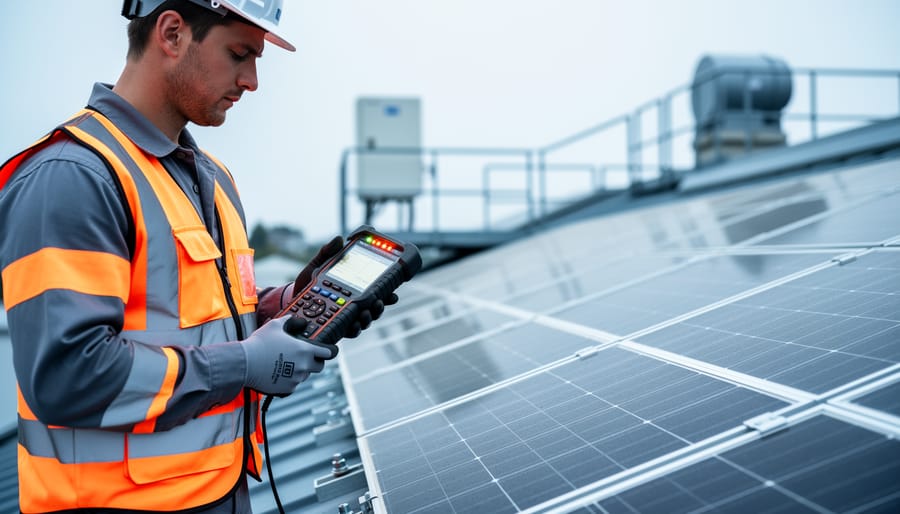
J Tech Solar is a specialized manufacturer of diagnostic and testing equipment designed to help solar professionals quickly identify performance issues, electrical faults, and safety hazards in photovoltaic systems. For installers troubleshooting underperforming arrays or technicians conducting routine maintenance, these tools translate complex electrical measurements into actionable insights without requiring advanced electrical engineering knowledge.
The company emerged as a response to a practical problem in the solar installation industry: traditional multimeters and electrical testing equipment weren’t built for the unique challenges of photovoltaic systems. Solar arrays operate at high DC voltages, generate power even in low light conditions, and can develop subtle inefficiencies that standard testing tools miss entirely. J Tech Solar’s product line addresses these gaps with purpose-built instruments that measure string voltage, detect ground faults, verify proper polarity, and assess module-level performance.
Understanding what these tools do and how they work matters because the difference between a high-performing solar installation and one that underdelivers often comes down to problems invisible to the naked eye. A single shaded cell, a corroded connection, or an incorrectly wired combiner box can reduce system output by 10 to 30 percent without triggering any obvious warning signs. Diagnostic equipment catches these issues during installation commissioning, routine inspections, or when investigating customer complaints about lower-than-expected energy production.
This article explains the core diagnostic technologies J Tech Solar employs, breaks down their primary product categories, and shows how solar professionals apply these tools across real-world installation and maintenance scenarios.
What J Tech Solar Means for the Industry
J Tech Solar represents a specialized tier in the solar equipment market focused exclusively on diagnostic technology, tools that measure, analyze, and troubleshoot photovoltaic system performance. Rather than manufacturing panels or inverters, the company builds the instruments that verify those components work as designed and continue performing at peak efficiency throughout their operational lifespan.
The company serves three distinct user groups. Professional installers rely on J Tech diagnostic equipment during commissioning to confirm new systems meet contractual performance guarantees and identify installation errors before handoff. Maintenance technicians use these tools for scheduled inspections and rapid fault diagnosis, catching degradation patterns early and pinpointing failing components without guesswork. Informed system owners, particularly those managing commercial or utility-scale installations, deploy J Tech solutions for continuous performance monitoring, protecting their investment through data-driven maintenance decisions.
What sets J Tech Solar apart is their focus on field-ready precision. While many diagnostic tools prioritize simplicity over accuracy or require laboratory conditions for reliable measurements, J Tech designs equipment that delivers lab-grade results in actual installation environments. Their tools account for real-world variables like temperature fluctuations, shading patterns, and soiling effects that often skew simpler diagnostic methods.
- IV Curve Tracing
- Measurement of a solar panel’s current-voltage relationship under specific conditions, revealing performance characteristics and identifying cell-level defects. This diagnostic baseline shows whether a module operates within manufacturer specifications.
- Thermal Imaging Analysis
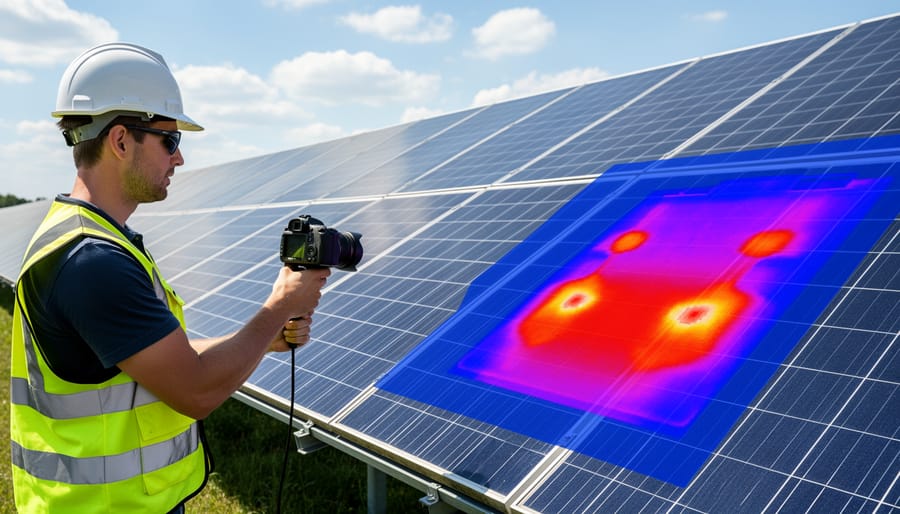
- Infrared scanning that detects hot spots, bypass diode failures, and connection problems invisible to visual inspection. Temperature anomalies often indicate electrical faults before they cause complete component failure.
- String Testing
- Diagnostic evaluation of series-connected panel groups to identify underperforming modules, wiring issues, or mismatched components within a circuit. String-level analysis isolates problems faster than whole-array testing.
- Performance Ratio Measurement
- Calculation comparing actual energy output to theoretical maximum under current conditions, accounting for temperature, irradiance, and system losses. This metric reveals efficiency degradation and quantifies underperformance.
The technical foundation matters because accurate diagnostics drive better decisions. An installer who catches a wiring error during commissioning avoids warranty claims and callbacks. A maintenance team that spots early degradation schedules proactive repairs instead of emergency fixes. J Tech Solar positions diagnostic precision as the difference between reactive troubleshooting and strategic system management, turning testing from a compliance checkbox into a performance optimization tool.
How J Tech Solar’s Diagnostic Tools Work
Testing Methodology
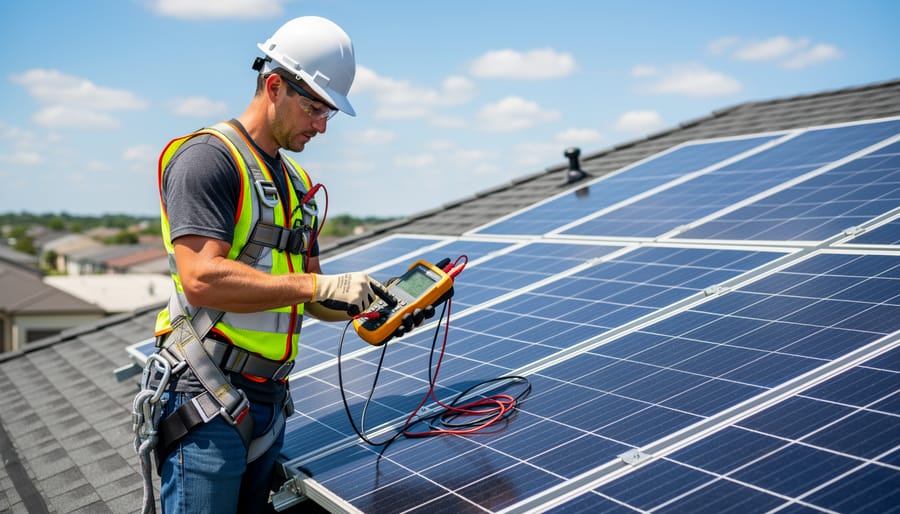
J Tech Solar tools follow a systematic approach to system evaluation that combines electrical measurement with diagnostic interpretation. The process begins when a technician connects the testing device to either individual modules or string-level terminals, depending on the scope of the assessment.
The core of J Tech’s photovoltaic testing methodology centers on IV (current-voltage) curve analysis. The tool applies a controlled variable load across the solar panel or string while simultaneously measuring current output at each voltage point. This generates a characteristic curve that reveals maximum power point, open-circuit voltage, and short-circuit current, the three critical performance indicators. Understanding IV curve basics is essential because deviations from expected curve shapes immediately flag specific problems: a flattened curve suggests shading or soiling, while irregular steps indicate bypass diode failures or cell-level damage.
For string-level diagnostics, J Tech tools measure voltage drop and current flow across multiple panels in series, comparing each string’s output against system design specifications. Module-level testing isolates individual panels, running the same IV analysis to pinpoint underperformers within a string. The entire assessment typically takes two to five minutes per test point, with results displayed in real-time on the device screen and stored for comparison against baseline measurements or manufacturer datasheets.
Data Analysis and Reporting
J Tech Solar’s diagnostic tools process the electrical measurements they collect, voltage, current, resistance, temperature, through proprietary algorithms that compare actual performance against expected baselines. The software flags deviations that indicate specific problems: a module producing 15% below rated output triggers a degradation alert, while abnormal resistance readings point to connection faults.
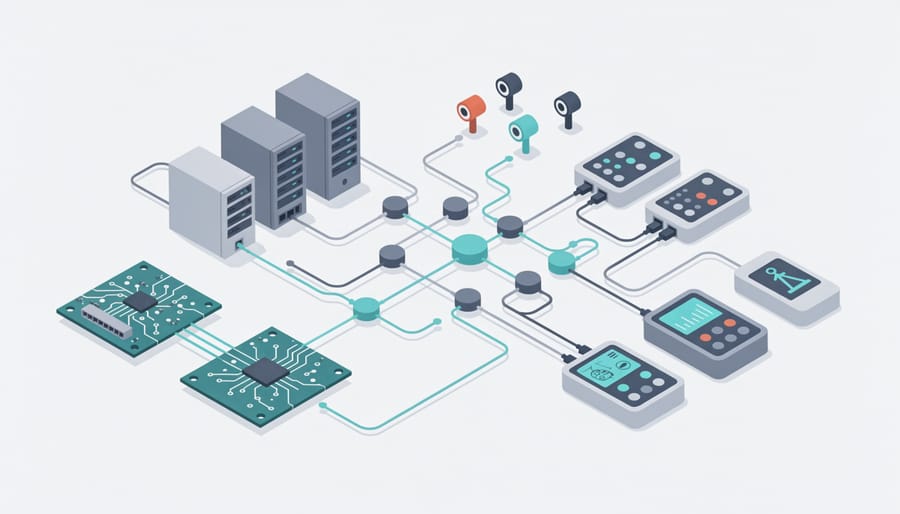
Results appear in visual dashboards that translate technical data into clear status indicators. Color-coded performance maps show which modules or strings underperform, letting installers pinpoint problem areas without interpreting raw numbers. Graph overlays compare current output to historical trends and manufacturer specifications, making performance drops immediately visible.
The tools generate PDF reports that installers can share with system owners, breaking down findings into non-technical language alongside technical appendices for detailed review. Most J Tech devices sync wirelessly with cloud platforms, allowing remote report access and automatic alerts when performance thresholds are breached.
Alert systems categorize issues by severity: critical faults like ground faults demand immediate attention, while gradual efficiency losses schedule maintenance reminders. Integration with popular monitoring platforms like SolarEdge and Enphase lets J Tech data feed into existing system dashboards, consolidating diagnostic insights with real-time production monitoring without requiring separate software interfaces.
J Tech Solar’s Product Portfolio and Testing Solutions
Portable Field Testing Equipment
J Tech Solar’s portable field testing equipment puts professional-grade diagnostics in the palm of an installer’s hand. These handheld devices typically weigh under five pounds and run on rechargeable lithium-ion batteries that deliver six to eight hours of continuous testing, enough for a full day’s work without access to power.
The rugged construction matters in real-world conditions. Most units feature IP65-rated enclosures that withstand dust, rain, and the occasional drop from ladder height. Sunlight-readable displays remain visible even in direct sun, while intuitive touchscreen interfaces let technicians navigate tests wearing work gloves.
Key capabilities include rapid IV curve tracing that measures panel output in under 30 seconds, string voltage and current verification, and ground resistance testing. Many models store hundreds of test results internally, then sync wirelessly to smartphones or tablets for instant report generation on-site.
The portability advantage shows up during commissioning inspections, where technicians move from array to array verifying each string meets specifications. Instead of lugging heavy benchtop equipment or waiting for lab analysis, installers confirm proper operation before leaving the job site, catching wiring errors, shading issues, or defective modules while crews and equipment are still on location.
Advanced Monitoring and Analytics Systems
J Tech Solar’s advanced monitoring systems move beyond one-time field tests into continuous oversight. These installations, typically mounted at the inverter or combiner box level, track array output around the clock, logging voltage, current, and power data at intervals ranging from seconds to minutes. The systems aggregate this stream into performance baselines, flagging deviations that signal emerging faults: a string producing 15% less than its neighbours, gradual efficiency drift across a module group, or intermittent shading patterns that weren’t obvious during commissioning.
The predictive maintenance angle separates these tools from basic inverter monitoring. Machine learning models, trained on historical degradation curves and environmental variables, forecast when a module or string will cross a performance threshold requiring attention. Early warnings let maintenance teams schedule interventions during planned downtime rather than responding to failures. Research on predictive maintenance for solar shows this approach cuts unplanned outages and extends equipment lifespan by catching issues before they cascade.
J Tech’s analytics platforms present findings through web dashboards or mobile apps, translating raw datasets into color-coded alerts, trend graphs, and prioritized action lists. Integration with SCADA systems or third-party monitoring services is standard, allowing fleet managers to oversee dozens of sites from a single interface without proprietary silos.
Specialized Testing Modules
J Tech Solar’s specialized modules address diagnostics challenges that general-purpose tools can’t resolve. Thermal imaging accessories clip onto standard test equipment, enabling installers to spot hot cells and junction-box failures on Trina PV modules and competing brands without carrying separate cameras. String-level fault detectors isolate underperforming strings in large arrays by measuring current imbalances at combiner boxes, cutting troubleshooting time from hours to minutes. Ground fault locators trace leakage paths in wet conditions or aging systems, pinpointing insulation breakdown before it triggers inverter shutdowns. These niche tools complement core diagnostics when standard IV curves and voltage readings don’t reveal the root cause.
Real-World Applications: How J Tech Solar Improves System Performance
Installation and Commissioning
During system commissioning, installers rely on J Tech Solar’s portable diagnostic tools to verify that every panel meets its nameplate specifications before signing off on the installation. The testing process starts with baseline IV curve measurements across the array, comparing actual output against manufacturer ratings to confirm panels are performing within acceptable tolerances, typically 95% or better of rated capacity.
J Tech’s field testers catch common installation errors that would otherwise degrade long-term performance: reversed polarity in combiner boxes, mismatched string configurations, inadequate grounding, and shading issues that weren’t apparent during site assessment. The tools flag these problems immediately through color-coded alerts and deviation warnings, allowing crews to correct issues on the spot rather than discovering them months later during the first performance review.
Installers use the documented test results as handoff verification, providing system owners with certified baseline data that establishes expected performance benchmarks. This commissioning record becomes the reference point for all future diagnostics, making it easier to detect degradation or new faults over the system’s lifetime.
Ongoing Maintenance and Performance Monitoring
J Tech Solar’s diagnostic tools transform maintenance from reactive repair to proactive optimization. Regular scanning with their equipment reveals gradual efficiency losses, typically 0.5% to 1% annually, that otherwise go unnoticed until production drops significantly. By establishing baseline performance metrics during commissioning and comparing them against periodic diagnostic sweeps, maintenance teams spot degradation patterns early, often preventing minor issues from escalating into costly failures.
These tools prove particularly valuable for aging installations where degradation accelerates. Thermal imaging modules detect hot spots indicating cell-level failures before they spread. String-level analyzers identify underperforming circuits that drag down entire arrays. This data-driven approach extends system lifespan and helps operators decide when component replacement makes economic sense versus pursuing repowering projects for older arrays.
Troubleshooting and Fault Resolution
When solar output drops unexpectedly, J Tech diagnostic tools cut through guesswork by isolating the problem component. Installers typically start with a system-wide scan to identify underperforming strings, then drill down to individual modules using IV curve analysis. The tools flag issues like bypass diode failures, cell damage, and shading patterns that might otherwise take hours to locate manually.
Most troubleshooting sessions take 15-30 minutes rather than half a day spent swapping components at random. The equipment’s real-time display shows whether a fault originates at the module, wiring, or inverter level, critical information when customers are losing production revenue. For intermittent problems that disappear during site visits, J Tech’s logging features capture historical performance data that reveals patterns pointing to loose connections, thermal cycling issues, or ground faults developing over time.
What Solar Professionals Say About J Tech Solar
Solar installers who’ve integrated J Tech Solar equipment into their workflow consistently praise the tools’ precision during commissioning and troubleshooting phases. Mike Henderson, a lead installer with twelve years of commercial solar experience, notes that the string-level diagnostics cut his fault-identification time by roughly half compared to older multimeter-based approaches. He values the immediate visual feedback when testing new installations, which helps catch wiring errors or underperforming panels before systems go live.
Maintenance technicians appreciate the portability of J Tech’s field testing units, especially when diagnosing remote or rooftop arrays. Sarah Chen, who manages a maintenance fleet servicing over two hundred residential sites, reports that the thermal imaging accessory proved essential for spotting hotspots on aging JA Solar modules during routine inspections. She emphasizes that early detection prevented costly module replacements and avoided performance losses that customers might otherwise blame on her service contracts.
System integrators highlight the return on investment angle. One regional integrator calculated that identifying two major installation errors per quarter, mistakes that would have triggered warranty claims or callbacks, justified the equipment cost within eighteen months. The reporting features also streamline communication with clients: instead of explaining abstract voltage readings, technicians share clear performance graphs and fault locations, which builds customer confidence and reduces dispute resolution time.
The recurring theme across professional feedback centers on reliability under field conditions. Tools that survive job-site handling, deliver consistent readings across varying weather, and require minimal recalibration earn trust from crews who depend on accurate data to protect their reputations and project margins.
Frequently Asked Questions About J Tech Solar
Are J Tech Solar tools compatible with all solar panel brands?
J Tech diagnostic equipment works with virtually any photovoltaic system regardless of panel manufacturer, as the tools measure fundamental electrical characteristics common to all solar modules. Compatibility depends on system voltage and configuration rather than specific panel brands.
Can homeowners use J Tech Solar diagnostic tools, or are they only for professionals?
While J Tech designs primarily for professional installers and maintenance technicians, some basic models suit homeowners comfortable with electrical testing. Most advanced features and accurate interpretation of results require technical knowledge that professionals bring.
How do J Tech tools integrate with existing monitoring systems?
Many J Tech devices export data in standard formats compatible with popular monitoring platforms, allowing seamless integration through CSV exports or direct API connections. The level of integration varies by tool model and your existing monitoring software.
What training is required to operate J Tech diagnostic equipment effectively?
J Tech offers online tutorials and certification courses covering proper testing procedures, safety protocols, and data interpretation. Most installers familiar with basic electrical testing can learn the fundamentals in a few hours, though mastering advanced diagnostics takes hands-on practice.
Pricing for J Tech Solar diagnostic tools varies significantly based on capabilities and intended use. Entry-level handheld testers start around the cost of quality multimeters, while comprehensive field testing kits with IV curve analysis reach professional equipment price ranges. Commercial-grade monitoring systems represent larger investments but often pay for themselves through reduced service calls and faster troubleshooting.
The tools suit both residential and commercial applications, though you’ll select different models based on system size and complexity. Residential installers typically carry portable testers that handle standard rooftop arrays, while commercial contractors need equipment capable of managing larger voltage ranges and analyzing extensive string configurations. J Tech’s product line scales to meet both needs without forcing users to buy capabilities they won’t use.
Compared to competing diagnostic solutions, J Tech Solar tools earn recognition for balancing accuracy with field practicality. Where some alternatives prioritize laboratory-grade precision at the expense of durability, J Tech equipment survives jobsite conditions while delivering measurements reliable enough for warranty claims and performance verification. The reporting interface receives consistent praise for translating technical data into clear recommendations that installers can act on immediately.
J Tech Solar represents a meaningful step forward in making solar diagnostics accessible and actionable. By developing testing equipment that bridges the gap between professional-grade precision and practical field use, the company addresses a persistent challenge in the solar industry: verifying that systems perform as promised and maintaining that performance over decades.
The value of diagnostic tools extends beyond troubleshooting. For homeowners, accurate testing means confidence that their investment delivers the expected energy savings and environmental benefits. For installers and maintenance professionals, reliable diagnostics translate to faster commissioning, reduced callbacks, and the ability to differentiate service quality in a competitive market. System owners who monitor performance actively typically see 3-8% higher lifetime energy yields compared to those who rely on reactive maintenance alone.
When evaluating diagnostic solutions, consider compatibility with your existing equipment, the learning curve for your team, and whether the tool addresses your most common failure modes. A handheld tester that identifies string-level faults in ten minutes delivers more value than a comprehensive system that requires an hour of setup for routine checks.
Solar testing technology will continue evolving alongside panel efficiency gains and monitoring capabilities. We’ll likely see tighter integration between diagnostic hardware and predictive analytics platforms, making it easier to spot degradation patterns before they impact production. The companies that succeed will be those offering tools that installers actually want to carry and homeowners can understand without technical training.