What Is Photovoltaic Testing (and How Does It Work)?
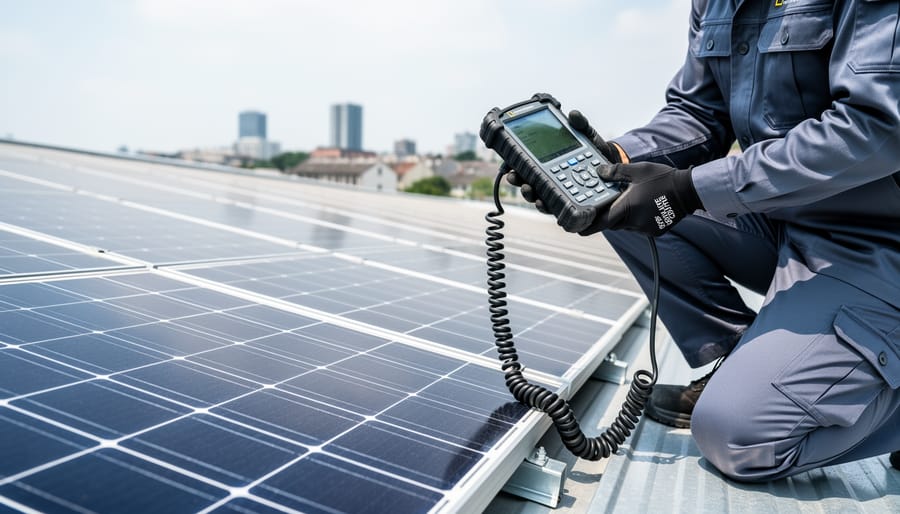
Photovoltaic testing is the systematic evaluation of solar panel performance, safety, and durability through a series of standardized measurements and diagnostic procedures. Whether you’re a homeowner planning to invest in a rooftop solar array or a commercial facility manager overseeing an existing installation, understanding how your panels perform under real-world conditions directly impacts your energy savings and return on investment.
Solar panels degrade over time, experience weather-related stress, and occasionally suffer manufacturing defects that aren’t visible to the naked eye. Testing identifies these issues before they erode system efficiency or create safety hazards. A panel that appears perfectly intact might be underperforming by 15% or more due to microcracks, delamination, or electrical resistance problems that only specialized testing can reveal.
The importance of rigorous testing has grown alongside the solar industry itself. As installations age and warranties come under scrutiny, third-party verification of manufacturer claims has become standard practice. New testing technologies introduced in recent years, including advanced electroluminescence imaging and drone-mounted thermal sensors, allow technicians to diagnose problems across large solar farms in hours rather than days.
This article breaks down what photovoltaic testing involves, from basic performance measurements to sophisticated laboratory protocols. You’ll learn which tests matter most for residential systems, how professionals conduct field diagnostics, and when to request testing for your own installation. We’ll also explore the latest equipment advancements that are making solar quality assurance more accessible and accurate than ever before.
What Photovoltaic Testing Measures
Photovoltaic testing measures the actual performance of your solar panels against what manufacturers promise and what your investment requires. At its core, testing evaluates whether panels generate the expected power output under specific conditions, operate safely without electrical faults, and maintain efficiency over time. These assessments provide concrete data rather than marketing claims.
The primary parameter tested is power output, measured in watts. Testers evaluate maximum power point (the optimal combination of voltage and current where a panel produces peak wattage), comparing real-world results to the nameplate rating stamped on each panel. A 400-watt panel should deliver close to that under standard test conditions, and testing reveals if it falls short.
Voltage and current measurements work together to paint a complete performance picture. Open-circuit voltage (measured when no load is connected) and short-circuit current (measured when terminals are directly connected) establish the panel’s electrical boundaries. These readings detect cell damage, wiring issues, and manufacturing defects that reduce output.
Temperature coefficients quantify how panels respond to heat. All solar panels lose efficiency as they warm up, but the rate varies. Testing determines the percentage of power loss per degree Celsius above 25°C, helping predict real-world performance in your climate. A panel with a -0.3% temperature coefficient will perform better in hot conditions than one rated at -0.5%.
Efficiency testing measures what percentage of sunlight hitting the panel converts to electricity. While residential panels typically range from 18% to 23% efficiency, testing verifies manufacturers haven’t overstated these figures and identifies underperforming units before installation.
Degradation rate testing tracks power loss over time. Quality panels degrade roughly 0.5% annually, but poor manufacturing or materials accelerate decline. Early testing establishes a baseline, and periodic retesting reveals whether degradation stays within warranty terms or signals deeper problems requiring attention.
For system owners, these metrics directly impact your bottom line. A panel producing 10% below its rating costs you money every sunny day. For installers, testing protects reputation and prevents callbacks by catching defective equipment before it reaches rooftops.
How Photovoltaic Testing Works
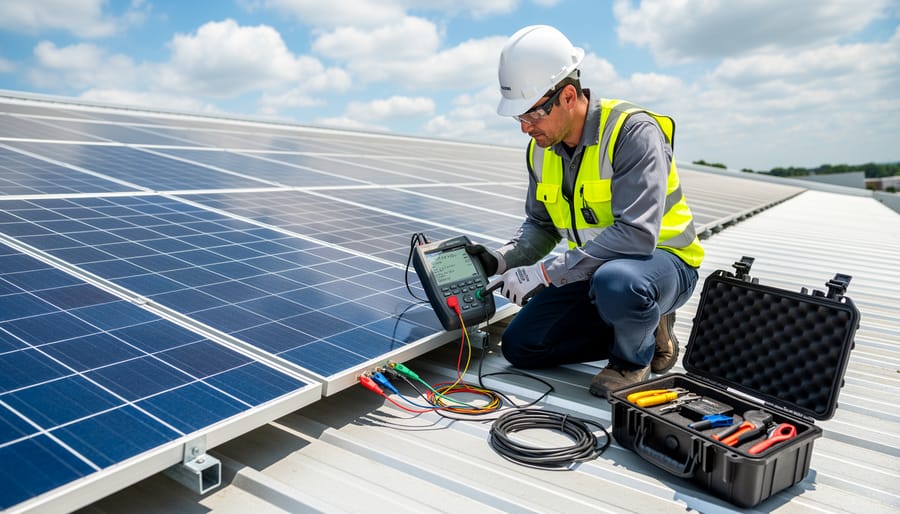
Laboratory vs. Field Testing
Laboratory testing and field testing serve different but complementary roles in verifying solar system quality and module performance. Lab testing happens in controlled environments using solar simulators that replicate standard test conditions: 1000 watts per square meter of irradiance, 25 degrees Celsius cell temperature, and a specific light spectrum. Manufacturers use these precise conditions to rate panel efficiency, generate spec sheets, and ensure products meet certification requirements before they reach the market. The controlled environment eliminates variables like weather, shading, or dust, making it easier to compare panels objectively and spot manufacturing defects.
Field testing, by contrast, evaluates installed systems under real-world conditions. Technicians measure actual power output, voltage, and current while panels face changing sunlight angles, ambient temperatures, soiling, and shading from nearby trees or buildings. This approach reveals how systems perform in their specific location and whether they’re delivering the expected energy output promised by lab ratings. Field testing catches installation errors, wiring problems, and degradation that wouldn’t show up in a factory.
Most solar owners encounter field testing during system commissioning and maintenance inspections. Lab testing matters when choosing panels, since those standardized ratings let you compare manufacturers fairly. Together, both methods provide a complete picture of quality and performance.
Types of Photovoltaic Testing Methods
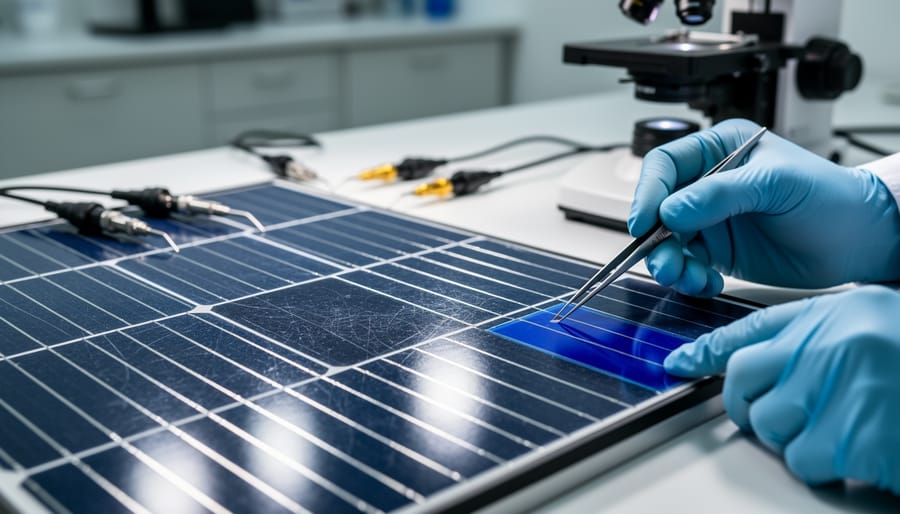
Performance and Efficiency Testing
Performance and efficiency testing quantifies how well solar panels convert sunlight into electricity under real-world and standardized conditions. The most fundamental method is IV (current-voltage) curve testing, which maps the electrical characteristics of a panel across its full operating range. An IV curve tracer applies varying loads to the panel while measuring voltage and current output, producing a graph that reveals maximum power output, short-circuit current, open-circuit voltage, and fill factor, all critical indicators of panel health. This test exposes manufacturing defects, cell degradation, and connection problems that reduce output.
Efficiency testing measures how much incoming solar radiation becomes usable electricity, typically expressed as a percentage. Testers use calibrated reference cells or pyranometers to measure irradiance (light intensity) while simultaneously recording panel output. Temperature coefficients matter here: panel efficiency drops as temperature rises, so testing at various temperatures reveals how a panel performs on hot summer days versus cool mornings.
Maximum power point tracking (MPPT) verification ensures the system’s inverter continuously finds the optimal operating voltage for maximum energy harvest. Testers confirm the MPPT algorithm adjusts properly as light conditions shift throughout the day. Performance ratio testing compares actual energy production against the theoretical maximum under standard test conditions (STC: 1000 W/m² irradiance, 25°C cell temperature), accounting for real-world losses from temperature, soiling, shading, and system inefficiencies. A performance ratio above 80% indicates a well-functioning residential system.
Safety and Quality Testing
Safety testing verifies that your solar installation won’t harm people or property. Insulation resistance testing measures how well electrical components prevent current leakage, identifying degraded wiring or moisture infiltration before they create shock hazards. Ground continuity tests confirm that protective grounding systems will safely channel fault currents, preventing electrocution if equipment fails.
Hot spot detection uses thermal imaging cameras to identify overheating cells within panels. These hot spots occur when shaded or damaged cells resist current flow, generating excessive heat that can melt solder connections, crack glass, or ignite nearby materials. Modern Trina solar modules and JA Solar modules incorporate bypass diodes to minimize hot spot risks, but thermal scans still catch manufacturing defects or field damage that bypasses don’t address.
Potential induced degradation (PID) testing detects voltage-induced performance losses that occur when system voltage drives ion migration between cells and frames. PID can reduce panel output by 30% or more within months, particularly in high-voltage systems or humid climates. Testing applies elevated voltages in controlled conditions to reveal susceptibility before installation or to diagnose existing performance drops.
These safety and quality checks protect your investment and your family. A single undetected insulation failure or progressing hot spot can void warranties, trigger insurance claims, or cause fires.
Durability and Reliability Testing
Solar panels endure decades of harsh outdoor exposure, scorching heat, freezing cold, heavy snow, high winds, intense UV radiation, and relentless moisture cycles. Durability and reliability testing simulates these extremes in compressed timeframes to predict how panels will perform over their expected 25-to-30-year lifespan.
Accelerated aging tests subject panels to rapid temperature swings and environmental stress that mimic years of real-world wear in just weeks. Thermal cycling tests repeatedly heat panels to 85°C and cool them to -40°C, exposing weaknesses in solder joints, encapsulant materials, and cell connections that could cause premature failure. These cycles reveal whether panels can withstand daily temperature fluctuations without degrading.
Humidity-freeze testing combines high humidity (85% relative humidity at 85°C) with freezing temperatures to identify moisture ingress pathways and corrosion risks. Water vapor penetrating panel seals can corrode electrical connections and delaminate protective layers, so this test ensures encapsulation integrity holds up in damp, variable climates.
Mechanical load testing applies static and dynamic pressure, simulating snow accumulation, wind gusts, and hail impacts, to verify structural strength. Panels must withstand loads up to 5,400 pascals without cracking cells or deforming frames. Hail impact tests fire ice balls at panels to confirm glass strength.
UV exposure tests bombard panels with intense ultraviolet light equivalent to years of sun exposure, checking whether encapsulants yellow, backsheets crack, or materials become brittle and lose adhesion. These tests predict whether panels maintain transparency and structural integrity under relentless solar radiation, protecting your long-term energy production and investment.
New Solar Testing and Diagnostic Tools in 2026
The solar testing landscape has changed dramatically with the arrival of sophisticated diagnostic technologies that bring laboratory-grade accuracy into the field. These innovations address longstanding challenges: reducing testing time from hours to minutes, catching defects invisible to the naked eye, and putting actionable performance data directly into installers’ and system owners’ hands.
AI-powered diagnostic platforms now analyze complex performance patterns across thousands of data points, identifying subtle degradation trends, wiring faults, and shading losses that would take human analysts weeks to uncover. These systems learn from vast databases of panel behavior, flagging anomalies and predicting failures before they cause significant power loss.
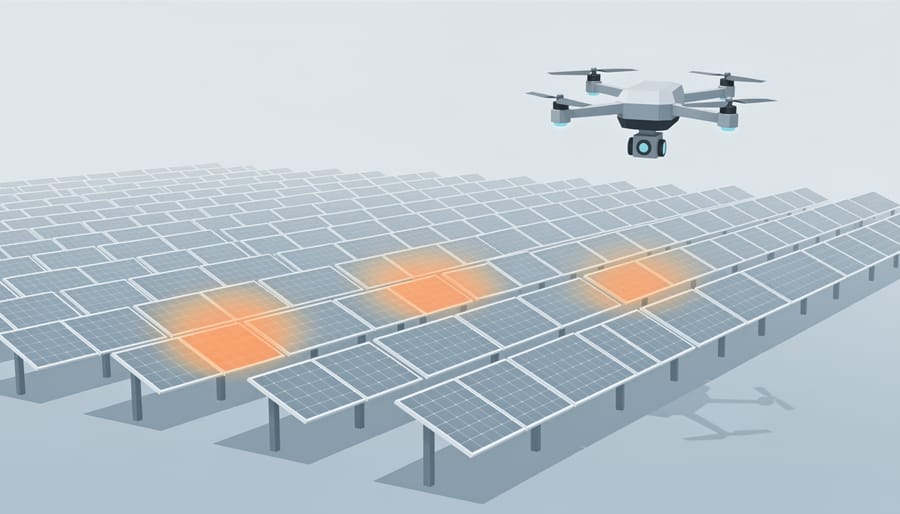
Drone-mounted thermal imaging has revolutionized large-scale array inspections. What once required crews with handheld cameras walking rows of panels for days now happens in a single flight, producing high-resolution thermal maps that pinpoint hot spots, cracked cells, and bypass diode failures across entire solar farms. Commercial property managers and utility-scale operators can schedule targeted repairs instead of costly blanket maintenance.
The newest tools reshaping photovoltaic testing include:
- Portable IV curve tracers that connect to individual strings in minutes, generating full performance profiles without disconnecting the system or waiting for ideal weather
- Real-time monitoring platforms with predictive analytics that alert owners to underperformance the moment it deviates from expected output, often before monthly production drops become noticeable
- Mobile testing labs, van-based units equipped with calibrated instruments, that bring certified testing to residential and small commercial sites without shipping panels off-site
- Electroluminescence cameras small enough for rooftop use, revealing microcracks and cell defects through quick nighttime scans
- Blockchain-verified testing records that create tamper-proof performance histories for warranty claims and system resales
These advances democratize access to professional-grade testing. Residential installers can now offer verification services that were previously exclusive to utility-scale projects, and homeowners can request detailed performance audits without prohibitive costs. The shift from annual manual inspections to continuous automated monitoring means problems get caught early, maximizing energy production and protecting the substantial investment a solar system represents.
When and Why Photovoltaic Testing Is Used
Photovoltaic testing serves distinct purposes throughout a solar system’s lifecycle, from initial equipment verification to ongoing performance management.
Pre-installation quality control catches manufacturing defects before panels reach your roof. Reputable installers test modules upon delivery, identifying issues like micro-cracks, cell mismatches, or electrical faults that could compromise long-term performance. This step protects both homeowners and commercial buyers from installing substandard equipment.
Commissioning verification occurs immediately after installation. Technicians test the complete system to confirm it meets design specifications and local code requirements. They verify proper wiring, measure actual power output against projected values, and document baseline performance. This initial snapshot becomes the reference point for all future comparisons.
Routine maintenance testing keeps systems running at peak efficiency. Most residential owners benefit from testing every two to three years, while commercial installations often require annual verification to satisfy financing agreements or performance guarantees. These periodic checks identify developing problems like soiling accumulation, connection degradation, or inverter inefficiencies before they significantly impact energy production.
Troubleshooting underperformance becomes necessary when monitoring data shows unexpected drops in output. Diagnostic testing pinpoints specific causes, whether shading from new tree growth, failing bypass diodes, or degraded panel efficiency. Thermal imaging and IV curve analysis excel at isolating problems within large arrays.
Warranty claims and compliance often require professional test documentation. Manufacturers typically demand certified performance data before honoring warranties, and commercial projects may need regular testing reports to maintain power purchase agreements or tax credit eligibility.
Pre-purchase inspections protect buyers of homes or buildings with existing solar installations, revealing the system’s actual condition and remaining productive life before money changes hands.
Key Terms Every Solar Owner Should Know
Understanding a few key terms will help you read test reports and have confident conversations with your installer about your system’s performance. These definitions form the foundation of photovoltaic testing language, regardless of whether you’re reviewing PV module basics or analyzing advanced diagnostics.
- IV Curve (Current-Voltage Curve)
- A graph showing the relationship between electrical current and voltage your panel produces under specific conditions. The curve’s shape reveals panel health and identifies performance problems.
- Flash Testing
- A quick factory quality check using a brief, intense light pulse to measure a panel’s power output in milliseconds. This verifies the panel meets its rated specifications before shipping.
- Electroluminescence (EL) Imaging
- A diagnostic technique that passes current through a panel in darkness to create an image revealing hidden cracks, defects, and cell damage invisible to the naked eye.
- Standard Test Conditions (STC)
- The industry benchmark conditions used for testing and rating panels: 1000 watts per square meter of light, 25°C cell temperature, and a specific light spectrum. Real-world performance typically differs from STC ratings.
- Performance Ratio
- The percentage comparing your system’s actual energy production to its theoretical maximum under real weather conditions. A ratio above 75% indicates a well-functioning system.
- Degradation Rate
- The annual percentage decline in panel output over time, typically 0.5% to 1% per year for quality modules. This metric helps predict long-term energy production and financial returns.
Familiarity with these terms transforms technical test reports from confusing documents into actionable insights. When your installer references these concepts during maintenance visits or troubleshooting, you’ll understand exactly what they’re measuring and why it matters for your investment.
Common Questions About Photovoltaic Testing
Most solar system owners have similar questions when it comes to testing. Understanding the practical aspects, costs, timing, and responsibilities, helps you make informed decisions about your system’s maintenance and performance verification.
How often should my solar system be tested?
Most residential systems benefit from professional testing every 3-5 years, while commercial installations typically require annual performance verification. Systems under warranty or experiencing performance issues may need more frequent testing.
Who is qualified to perform photovoltaic testing?
Certified solar installers, electrical contractors with PV credentials, and specialized testing companies can perform comprehensive evaluations. For warranty claims, manufacturers often require testing by certified professionals using calibrated equipment.
What does professional photovoltaic testing cost?
Basic performance testing for residential systems typically ranges from $300 to $800, while comprehensive evaluations including thermal imaging and detailed diagnostics can cost $1,000 to $2,500. Commercial system testing is priced based on system size and complexity.
Can I test my own solar system?
You can monitor basic performance through your inverter display or monitoring app, but comprehensive testing requires specialized equipment and training. Portable testing tools are available for DIY enthusiasts, though professional testing is recommended for warranty documentation.
What should I do if my system fails a test?
Document the results and contact your installer or manufacturer immediately, especially if the system is under warranty. Failed tests often identify specific panels or components that need replacement, which may be covered under warranty provisions.
How do test results affect my warranty coverage?
Most manufacturers require documented testing to validate performance warranty claims. Regular testing creates a performance record that can support claims if output drops below guaranteed levels, and some warranties specify testing intervals to maintain coverage.
Regular testing creates a performance baseline that helps you catch issues early, before they significantly impact your energy production or system lifespan. The new diagnostic tools available in 2026 have made testing faster and more affordable, making routine verification a practical part of system ownership rather than a costly exception.
Photovoltaic testing isn’t optional, it’s the foundation of protecting your solar investment. Without regular verification, you’re flying blind, unable to detect efficiency losses, safety hazards, or warranty-voiding defects until they cost you thousands. The good news? Testing has never been more accessible. The diagnostic tools emerging in 2026 deliver lab-grade accuracy in minutes, making comprehensive performance checks practical for every system owner.
Don’t wait for obvious problems to surface. Ask your installer what testing protocols they follow during installation and how you can schedule routine performance evaluations. Whether you’re considering solar or already generating power, make testing part of your ownership strategy. The data you gather today protects your returns for decades, ensuring your panels deliver the clean energy and financial performance you were promised.