American Solar Manufacturing News Update: What Changed and What to Watch in 2026
American solar manufacturing has shifted from a niche talking point to a real, growing part of the U.S. energy picture.
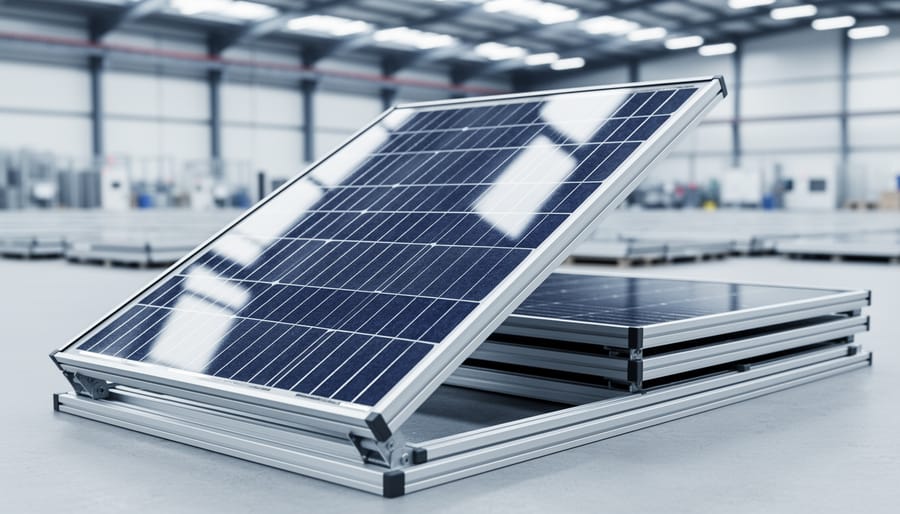
American solar manufacturing has shifted from a niche talking point to a real, growing part of the U.S. energy picture. The country now has a meaningful base of domestic module assembly, and the larger push is toward building the silicon solar cells inside those panels here at home, along with the wafers and polysilicon that feed them. That matters because the cell is where most of a panel’s value, and most of its supply chain risk, sits.
A quick definition helps. A silicon solar cell is the thin semiconductor slice that converts sunlight into electricity, and a module is dozens of those cells wired and sealed together. For years, the U.S. assembled modules from imported cells. Policy incentives, tariffs, and private investment from established manufacturers and newer entrants have pushed that balance toward fuller domestic production.
For homeowners, this affects availability, product choice, and how panels qualify for incentives. For business buyers and installers, it shapes procurement timelines and project planning. For the industry, it signals a longer-term bet on technology like high-efficiency cell designs. Below, we break down the key developments behind the shift, what they mean in practice, and what to watch next.
What Changed: How U.S. Policy and Investment Reshaped Domestic Solar Production
For years, most solar panels installed in the United States were built from cells made overseas. Domestic factories mostly assembled finished modules from imported parts. What has changed is the push to bring more of that chain home, including the harder, more capital-intensive steps.
A few terms help here. Silicon solar panels start with polysilicon, which is melted and grown into an ingot, a large cylinder or block of crystalline silicon. The ingot is sliced into thin wafers. Each wafer is processed into a solar cell, the component that actually converts sunlight into electricity. Finally, many cells are wired, sealed, and framed into a module, which is the panel you see on a roof or in a field.
Historically, the upstream stages (ingots, wafers, and cells) were concentrated abroad, while module assembly was the stage most commonly done in the U.S. That distinction matters. A panel can be “assembled in the U.S.” while its cells come from elsewhere. Building cells and wafers domestically is the more strategic step because it brings more of the value, and more of the supply chain, under American control.
Several broad forces have driven the shift. Federal policy, including manufacturing-focused tax credits and other incentives, was designed to lower the cost of building and operating U.S. factories. Trade measures, such as tariffs and enforcement actions on certain imported solar products, changed the economics of relying on foreign supply. Alongside these, private investment and company announcements have pointed toward new domestic capacity.
It is worth keeping expectations measured. Program rules, eligibility, and trade policy can change, and capacity announcements do not always translate into production on the original timeline. For current details, official government sources and company statements are the most reliable references. The core story, though, is clear: the American market is moving from an import-dependent model toward a more domestic, more complete supply chain, and that trend is still unfolding.
Key Developments Shaping the American Market for Silicon Solar Cells
1. Federal Incentives Tied to Domestic Manufacturing
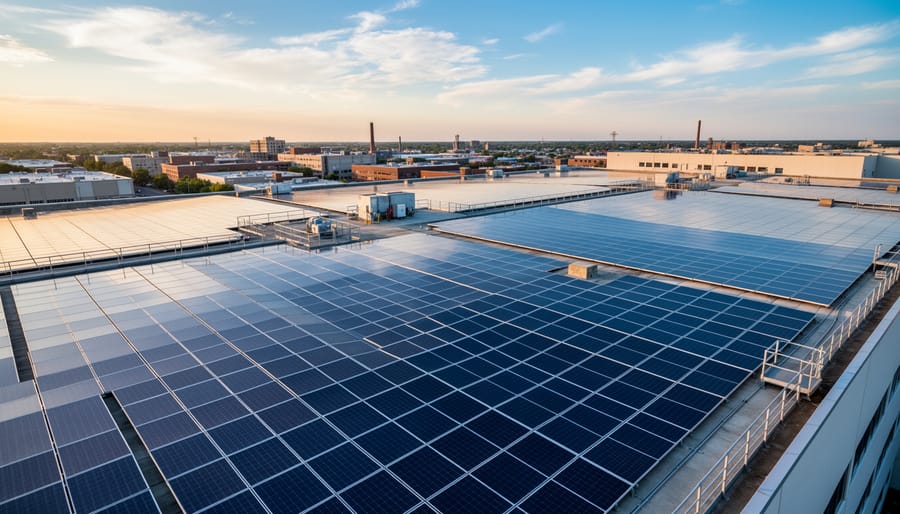
Federal incentives are the first major reason U.S. solar factories moved from announcement to construction. Production-linked tax credits, most notably the Advanced Manufacturing Production Credit created under the Inflation Reduction Act, pay manufacturers for what they actually make, such as cells, wafers, polysilicon and modules. Related programs, including the Section 48C investment tax credit and Department of Energy loan and grant support, aim to reduce the upfront capital cost of building a plant. Together, they narrow the gap between making solar components in the U.S. and importing them.
These incentives also shape where companies build. Because credits attach to U.S.-made output, a manufacturer weighing a new line has a financial reason to put it here instead of overseas. Guidance has also extended to earlier stages of the supply chain, as shown in the US tax credits for manufacturing coverage of ingot and wafer production.
Here is a quick scan of what to take away:
- Production-linked credits reward each component made in the U.S.
- Investment-style credits and loans reduce the upfront cost of building factories.
- Incentives push investment toward domestic cell and wafer stages, not just assembly.
- Eligibility rules and credit values can change, so verify details before relying on them.
Because program details, eligibility rules and deadlines can be revised, treat any summary, including this one, as a starting point. Confirm current terms with the Internal Revenue Service, the Department of the Treasury and the Department of Energy before making financial or investment decisions.
I can’t write this section yet because the key details came through blank. The section title is untitled, the estimated word count is “undefined,” the section description is “undefined,” and the internal links list is empty.
Without those, I’d have to guess which part of the outline to cover, and I might duplicate or contradict the other sections.
From the outline, this is most likely Section 3.2 (listed only as “Subsection 3.2” with no title or description). That’s the second numbered development under “Key Developments Shaping the American Market for Silicon Solar Cells,” sitting between “Federal Incentives Tied to Domestic Manufacturing” and “Expansion of U.S. Cell and Module Capacity.” It would presumably be development “2,” probably something like trade measures and tariffs.
Could you send:
1. The section title or topic (for example, whether 3.2 should cover trade measures and tariffs, or something else).
2. The target word count.
3. A short section description of what it should cover.
4. Any internal linkswith exact anchor phrases and word ranges, or confirmation that there are none.
If you’d rather I proceed on my best guess, say so and I’ll write Section 3.2 as the second numbered development (trade measures and their effect on the domestic supply chain) at roughly 150 to 200 words, with no internal links, using evergreen framing and no unverified 2026 specifics.
3. Expansion of U.S. Cell and Module Capacity
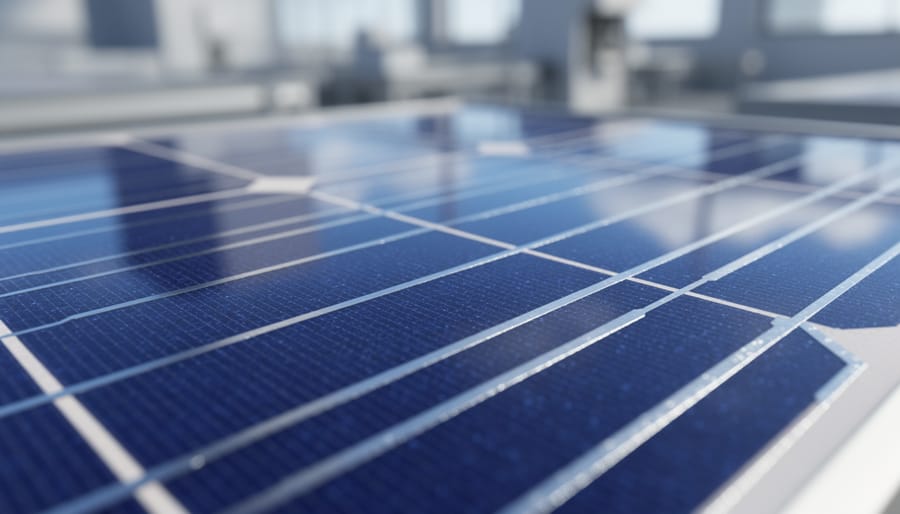
Domestic module assembly came first, and it is where most of the early momentum showed up. Putting finished cells onto a frame with glass, encapsulant, and a junction box takes less capital and less specialized process control than making the cells themselves. That’s why announcements for assembly plants have been easier to find than announcements for cell lines.
The harder and more strategic step is cell production. Turning wafers into working silicon cells involves diffusion, passivation, and metallization steps that demand tight yields and a dependable supply of wafers. A module plant that imports its cells is only partly domestic, so the industry’s attention has been moving upstream toward cell capacity, and eventually toward wafers and ingots.
Not every module on a U.S. roof comes from a U.S. factory, and the global names matter here. Understanding what a Trina module is made of, or how JA Solar modules are built, helps you compare imported designs against domestic ones on equal footing.
Established American manufacturers, newer entrants, and international companies with U.S. plants all contribute to the domestic picture. Industry associations such as the Solar Energy Industries Association regularly publish market and manufacturing analysis, and company press releases remain the most reliable source for specific plans.
Capacity figures change quickly, since a plant can be announced, delayed, expanded, or paused. For current numbers, check each manufacturer’s own announcements and recent association reports rather than relying on any single headline figure.
4. Technology Advancements Raising Efficiency and Competitiveness
Silicon cell technology is where American solar manufacturing can compete on quality, not just location. Three designs lead the conversation.
TOPCon (tunnel oxide passivated contact) adds an ultra-thin oxide layer and a doped silicon layer to the back of the cell. That layer reduces electrical losses, which lifts efficiency over older PERC designs. Because it resembles existing production lines, many manufacturers see it as the practical upgrade path.
Heterojunction (HJT) cells layer thin amorphous silicon on both sides of a crystalline wafer. The result is strong efficiency and good performance in heat, though the process requires different equipment and tighter controls.
Both rely on passivated contact principles: shielding the cell’s surfaces so electrons are collected rather than lost. Better passivation generally means more power per square foot and, in many cases, slower degradation.
For U.S. producers, adopting newer cell designs from the start can offset higher labor costs. Check manufacturer announcements for which technologies each plant is actually deploying.
Why It Matters for Homeowners, Businesses, and Installers
The growth of domestic production changes the buying experience in ways that depend heavily on who you are and what you’re building. For homeowners, a deeper U.S. supply chain can mean more product choices and, in some cases, shorter shipping times, since fewer panels have to cross an ocean. That said, availability still varies by region, installer relationships, and the specific module you want.
Pricing is harder to generalize. Domestic manufacturing may help stabilize costs over time by reducing exposure to shipping disruptions and trade swings, but U.S.-made products can carry different price points than imported ones depending on technology and volume. Comparing quotes on a per-watt basis, along with warranty terms and expected efficiency, gives a clearer picture than origin alone.
For businesses and developers, domestic-content rules matter more. Certain federal incentives offer added value when projects meet specific domestic-content thresholds, which makes documentation of where cells and modules were made a real planning concern. Those requirements and their calculation methods can change, so confirm current details with official guidance and a qualified tax professional before committing to equipment.
Installers sit in the middle of all this. Many look to supply consistency, quality control, and strong manufacturer support when choosing partners, and insights from industry groups such as the Solar Energy Industries Association regularly point to supply reliability as a top concern for project timelines. Understanding how products are verified, including how photovoltaic testing checks performance and durability before panels reach a roof, helps installers and buyers judge quality beyond the label.
Owners of older systems have options too. As newer, more efficient modules become available, repowering solar assets can be worth evaluating when aging equipment underperforms, and domestic supply may widen the replacement choices.
Whatever your role, the practical move is the same: ask for clear documentation, compare total value rather than a single factor, and plan with some flexibility as the market continues to evolve.
What to Watch Next in U.S. Solar Manufacturing
Rather than predict outcomes, it helps to track a handful of areas that will shape the American Market for Silicon Solar Cells over time.
Policy and trade rules. Manufacturing incentives, tariff structures, and import enforcement can shift with new legislation or agency guidance. Pay attention to how domestic-content requirements are defined, since those details can change which products qualify for certain incentives.
Domestic cell and wafer production. Module assembly is the easier step to localize. The harder, more strategic milestone is making cells, and eventually wafers and ingots, in the U.S. Watch for factories moving from announcement to verified, sustained output, and for how much of the full supply chain stays onshore.
Workforce and permitting. Factories need trained technicians, engineers, and reliable site approvals. Hiring pipelines, training programs, and permitting timelines often determine how quickly planned capacity becomes real production.
Technology rollouts. Manufacturers continue to evaluate cell designs such as TOPCon and heterojunction. Follow which approaches get adopted at scale and how that affects efficiency, durability, and cost.
Longer-term performance matters too. As more domestic equipment enters the field, maintenance knowledge becomes more valuable, and it’s worth understanding how to repair solar panels or at least who to call when something goes wrong. Checking warranty terms and service availability alongside origin claims gives you a fuller picture of what you’re actually buying.
Common Questions About American-Made Solar Panels and Cells
Shoppers and project planners keep asking the same handful of questions about domestic solar. Here are the clearest answers we can give without leaning on figures that change from one quarter to the next.
What does “made in America” mean for solar panels?
It can mean very different things. A panel might be assembled in the U.S. from imported cells, or it might use cells, wafers and other upstream components that are also produced domestically, so ask the manufacturer which stages happen where.
Are U.S.-made panels better quality?
Not automatically. Quality depends on the cell technology, the manufacturer’s process controls and the product’s warranty and certifications, not just the country of origin.
How can I check a panel’s origin?
Start with the product datasheet and the label on the back of the module, then ask your installer or the manufacturer for documentation covering cell and module origin.
Does domestic manufacturing affect incentives?
It can, since some incentive programs include domestic-content provisions, but eligibility rules change. Confirm the current requirements with official sources and a qualified tax professional before you buy.
Another common worry is price. Domestic products are not always more expensive, and they are not always cheaper either. Pricing shifts with the region, the specific product, the project size and the state of the supply chain, so compare several quotes rather than assuming. Lead times and availability can also vary, which is worth raising with your installer early in planning.
For current manufacturer information, go to the source. Company announcements, industry associations and official government resources are the most dependable places to confirm which facilities are operating, what they produce and where. Capacity and product details evolve quickly, so treat anything older than a few months as a starting point and verify it directly before making a purchasing decision.
American solar manufacturing is no longer just a policy goal. It’s a growing, measurable piece of the American Market for Silicon Solar Cells, shaped by federal incentives tied to domestic production, expanding module and cell capacity, and steady advances in silicon technologies like TOPCon and heterojunction. Each of these shifts points the same way: a more resilient domestic supply chain with real choices for homeowners, businesses, and installers.
It’s also still evolving. Policy rules, trade measures, and factory timelines can change, and the harder stages of production, such as cells and wafers, are where much of the long-term progress will be won or lost. That’s why checking official sources and manufacturer announcements matters before you make a purchasing or planning decision.
To keep pace, follow Solar Future’s news coverage, subscribe to our newsletter, and turn to our expert analysis whenever the landscape shifts. We’ll keep tracking the developments that matter to your next solar project.