Repowering Solar Projects: How to Maximize Returns from Aging Solar Assets
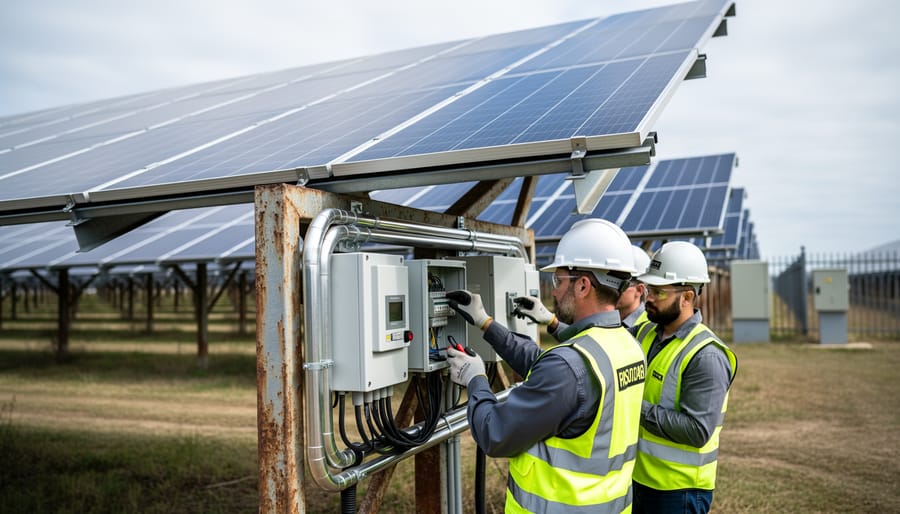
Developing a solar project requires navigating site assessment, permitting, financing, and interconnection agreements, typically spanning 12 to 36 months from initial feasibility studies to commercial operation. For solar professionals evaluating opportunities in 2026, the development process demands both technical expertise and financial acumen, particularly as the industry shifts toward more complex opportunities like repowering aging installations alongside traditional greenfield development.
The solar development landscape has matured considerably. While greenfield projects still dominate new capacity additions, a growing segment of the market now focuses on repowering installations built during the industry’s early expansion phase. These projects, often 10 to 15 years old, present unique opportunities to capture higher energy yields and extended revenue streams by replacing outdated equipment with current technology. The development process for repowering projects shares many steps with new builds but introduces distinct considerations around existing infrastructure, land lease modifications, and utility interconnection agreements already in place.
Success in solar development hinges on mastering the interplay between technical feasibility and project economics. Developers must evaluate solar resource data, conduct engineering studies, secure offtake agreements, and structure financing that satisfies lenders and equity partners. The complexity increases when repowering is involved, as developers must assess remaining equipment value, coordinate construction around existing operations, and optimize the business case for upgrading versus building new. Understanding these nuances separates viable projects from those that fail to reach financial close.
What Repowering Means for Solar Project Development
Solar repowering represents a middle ground between routine maintenance and new project development. At its core, repowering involves upgrading or replacing major components of an existing solar installation to restore or enhance performance, rather than building from scratch or simply maintaining current equipment.
The repowering spectrum varies widely in scope. At the simplest level, partial repowering might involve replacing degraded modules while retaining functional inverters and racking systems. Mid-range projects typically replace both modules and inverters, taking advantage of efficiency gains achieved since the original installation. Complete repowering overhauls every major component, modules, inverters, racking, and even electrical infrastructure, effectively creating a new system on an established site with existing interconnection and land rights.
Understanding the terminology helps clarify what repowering entails:
- Repowering
- The process of upgrading an existing solar installation by replacing major components to restore or boost energy production, typically triggered when equipment reaches the end of its useful life.
- Retrofit
- Installing new technology or components into an existing system without a complete replacement, such as adding storage or upgrading monitoring equipment alongside aging modules.
- Module Replacement
- Swapping out degraded solar panels with newer, often higher-efficiency models while maintaining existing mounting structures and electrical systems.
- System Upgrade
- A comprehensive overhaul replacing multiple major system components simultaneously to maximize performance improvements and minimize future intervention needs.
This work demands skills distinct from both new development and operations teams. Developers must navigate legacy infrastructure constraints, assess structural integrity of aging equipment, coordinate tighter construction timelines to minimize revenue disruption, and manage existing stakeholder relationships including offtakers and financiers. You cannot simply apply a greenfield development playbook, existing interconnection agreements, grandfathered permits, and physical site constraints require specialized evaluation expertise.
The repowering developer also faces different risk profiles. While land acquisition and interconnection queues pose less risk than greenfield projects, equipment compatibility, unforeseen structural issues, and coordinating around operational systems create unique challenges that require both development acumen and deep technical knowledge of evolving solar technologies.
Identifying Solar Projects Ready for Repowering
Performance and Age Benchmarks
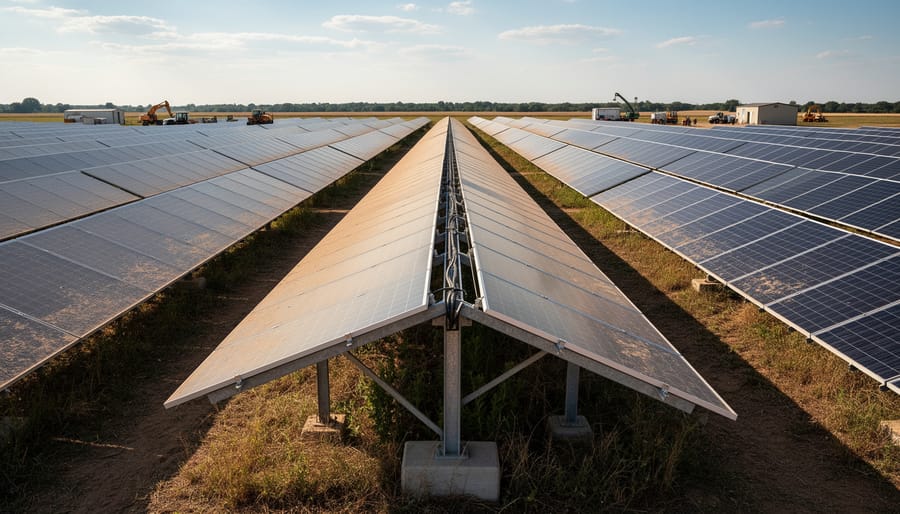
Solar projects installed between 2010 and 2015 now represent the primary cohort entering the repowering window. Most crystalline silicon modules exhibit typical degradation rates of 0.5% to 0.8% annually, meaning systems older than 12 to 15 years have lost 6% to 12% of their original capacity. Performance degradation accelerates after year 15 in many cases, particularly in modules manufactured before quality standards tightened.
Warranty structures provide another clear signal. Most manufacturers offer 25-year power warranties guaranteeing 80% to 85% of original output, but the economics shift well before that threshold. When actual production drops below 88% of nameplate capacity or when inverter warranties expire (typically 10 to 12 years for string inverters), the financial case for repowering strengthens considerably.
Developers should also watch for physical indicators: visible delamination, hot spots identified through thermal imaging, or frequent micro-inverter failures. When combined with age and performance benchmarks these technical signals help identify projects where replacement components will deliver measurably higher returns than continued operation with degraded equipment.
Economic Viability Assessment
Developers need to run rigorous numbers before committing to repowering. Start by calculating the simple payback period: divide the total repowering investment by the annual increase in energy production revenue. Most viable repowering projects show payback in 3 to 5 years, though this varies based on electricity rates and equipment costs. Production improvement projections should account for both the efficiency gain from new modules and any uprating opportunities, many repowering projects achieve 15% to 40% higher annual output from the same footprint.
The make-or-break analysis comes when you compare repowering costs to greenfield development on a per-watt basis. Repowering typically costs 40% to 60% of building new capacity from scratch, since you’re reusing foundations, electrical infrastructure, and interconnection. However, this advantage disappears if structural upgrades are needed or if permitting requires extensive modifications. Run a detailed cost breakdown that includes:
- Module and inverter procurement at current 2026 market rates
- Labor costs for removal, disposal, and installation
- Structural reinforcement or racking modifications if required
- Downtime revenue loss during construction
- Permitting and engineering fees specific to modifications
- Opportunity cost versus selling the site for redevelopment
Beyond payback, model the net present value over the extended project life. A repowering that adds 20 to 25 years of productive operation fundamentally changes the asset’s value proposition. Factor in how modern equipment warranties and lower operations costs improve the risk profile, making repowered projects attractive to secondary market buyers and lenders looking for stable, long-term cash flows.
The Development Process for Repowering Projects
Site Assessment and System Audit
Before investing in repowering, developers must conduct a thorough site assessment to determine what infrastructure can be retained and what requires replacement. This process differs significantly from greenfield development because you’re working within the constraints of an existing installation.
Start with a structural integrity evaluation of mounting systems and foundations. Racking installed 15-20 years ago may have experienced corrosion, fatigue, or settling that compromises its ability to support modern, larger modules. Ground-mounted systems require soil stability testing and foundation inspection, while rooftop installations need updated load calculations to verify the roof can handle newer, heavier panels.
The electrical infrastructure audit examines inverters, transformers, wiring, and combiner boxes. Legacy wiring may lack the capacity for higher-output modules, and grounding systems must meet current codes. Inverters nearing end-of-life represent both a challenge and opportunity, since replacement allows for technology upgrades to models with integrated monitoring and reactive power capabilities.
Compatibility analysis determines which components can work together. Modern high-efficiency modules often require different voltage ranges than original inverters supported, potentially forcing complete electrical system redesigns rather than simple module swaps.
Permitting and Interconnection Considerations
Repowering projects often benefit from existing permits and interconnection agreements, but developers shouldn’t assume automatic approval for system changes. The critical distinction lies in whether modifications fall within the original project scope or constitute a substantial alteration requiring new approvals.
Most interconnection agreements from utility-scale projects include capacity thresholds and technical specifications. If your repowering maintains the same or lower nameplate capacity and doesn’t change the point of interconnection, many jurisdictions allow you to proceed under the existing agreement. However, increasing system capacity, even marginally, can trigger a full interconnection study and queue position reassignment in some markets.
Permitting requirements vary significantly by jurisdiction. Building permits typically need amendments when you’re replacing racking systems or altering structural loads, but simple module swaps on existing foundations often qualify for streamlined review. Some states have established expedited repowering pathways that recognize the reduced environmental impact compared to greenfield development.
Grandfather clauses in local zoning ordinances can protect projects from new setback requirements or land-use restrictions enacted after the original installation. Document your existing permits thoroughly before starting design work, proving continuous operation under prior regulations is essential if disputes arise. Work closely with your permitting attorney to determine which approvals you can leverage versus which require fresh applications for your specific upgrade scope.
Technology Selection and Design
Technology selection during repowering requires balancing performance gains against compatibility with existing infrastructure. The goal isn’t simply installing the newest equipment, it’s choosing components that maximize output while working within your site’s physical and electrical constraints.
Module selection drives the economics of most repowering projects. Today’s panels deliver 20-25% more power per square foot than systems installed a decade ago, meaning you can boost capacity even while maintaining the same footprint. When evaluating replacements, prioritize modules that match your racking’s dimensional specifications and weight limits. Premium options like Trina PV module lines and JA Solar modules offer proven reliability with efficiency ratings exceeding 22%, though any manufacturer’s latest offerings will substantially outperform your aging panels.
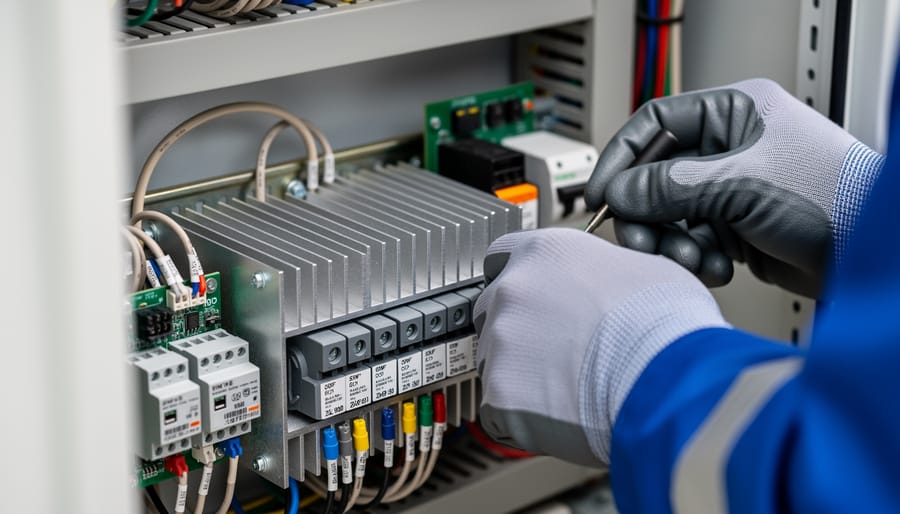
Inverter replacement deserves equal attention. String inverters have largely replaced the central inverters common in older utility-scale projects, offering better monitoring capabilities and reduced single-point-of-failure risk. For commercial installations, microinverters or DC optimizers weren’t widely deployed fifteen years ago but now provide module-level performance tracking that identifies issues before they significantly impact revenue.
Storage integration represents the biggest opportunity in repowering design. Battery systems pair naturally with panel upgrades since you’re already managing interconnection modifications and construction mobilization. DC-coupled configurations prove more efficient, but AC-coupled systems offer simpler retrofits when preserving functional inverters. Evaluate whether your interconnection capacity can accommodate both increased solar output and battery discharge, many older agreements have headroom that makes storage additions straightforward.
Technology Advancements Driving Repowering Opportunities
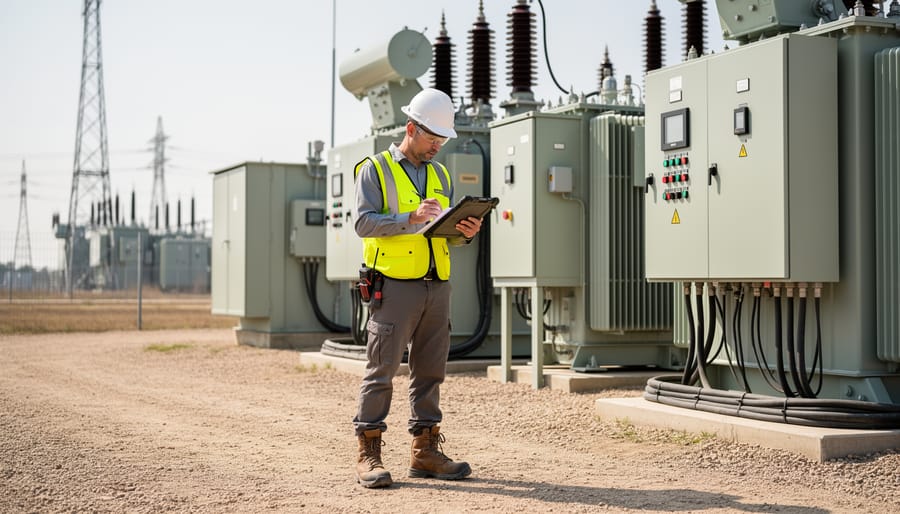
The technology gap between first-generation solar installations and current 2026 equipment creates the fundamental business case for repowering. Today’s solar modules deliver efficiency improvements that directly translate into higher energy production from the same footprint, while advanced inverters and integrated storage options unlock revenue streams that simply didn’t exist when many aging systems were built.
| Component | Early Systems (2010-2015) | Current Technology (2026) |
|---|---|---|
| Module Efficiency | 14-17% | 22-24% (monocrystalline) |
| Power Output per Panel | 250-280W | 450-500W |
| Performance Warranty | 80% at 25 years | 87-90% at 30 years |
| Inverter Efficiency | 95-96% | 98.5-99% |
The jump in module efficiency alone means replacing degraded 15-year-old panels can increase site production by 40-60% without expanding the project’s physical footprint. This matters enormously for projects with land constraints or where interconnection capacity limits total system size. Developers who examine current module specs against what’s installed will find the production uplift often justifies repowering even when existing equipment still functions.
Inverter technology has evolved beyond simple DC-to-AC conversion. Modern string inverters and central inverters now include integrated monitoring, rapid shutdown compliance, and grid-support functions that weren’t available a decade ago. Many also accommodate DC-coupled battery storage, allowing developers to add energy storage during repowering without additional conversion equipment. This storage integration capability addresses the growing market demand for dispatchable solar that can shift production to higher-value evening hours.
Bifacial modules represent another advancement worth considering during repowering projects. These capture reflected light from the ground surface, boosting production by 5-15% in favorable conditions. For ground-mount projects with reflective surfaces or elevated racking, swapping to bifacial technology during repowering provides incremental gains with minimal additional cost.
Financial Structures and Incentives for Repowering
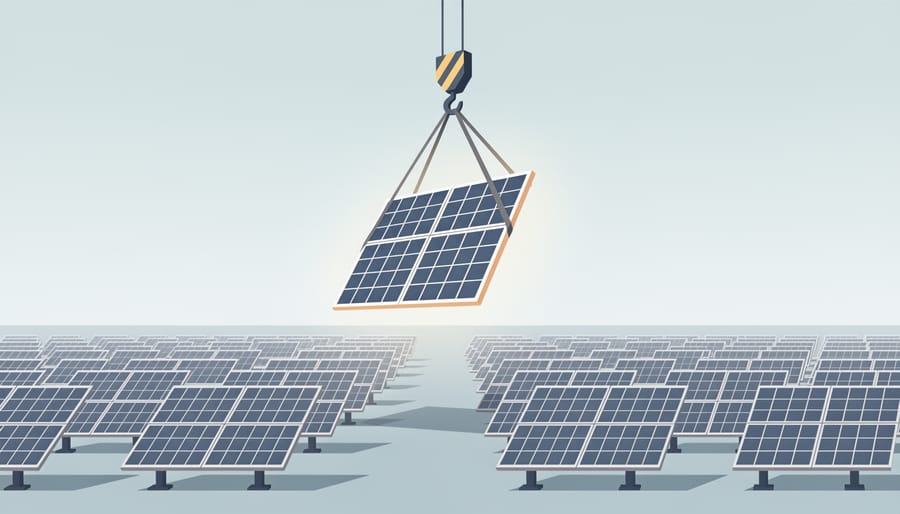
Repowering projects unlock distinct financial pathways that differ meaningfully from greenfield solar development. Understanding how federal incentives, depreciation schedules, and revenue agreements apply to upgraded systems is essential for structuring deals that deliver competitive returns.
The Investment Tax Credit remains available for repowering projects, though the qualification threshold matters. If your repowering work constitutes a “major improvement”, generally requiring you to replace or rebuild at least 80% of the system’s cost basis, you can claim the ITC at current rates on the qualified investment. This typically applies when you’re installing higher-efficiency modules replacing inverters, and upgrading racking systems simultaneously. Projects falling below this threshold may still qualify for partial credits on new component costs, but the full system value won’t reset for tax purposes.
Depreciation benefits shift compared to the original installation. Repowered equipment qualifies for Modified Accelerated Cost Recovery System (MACRS) treatment on new components, allowing owners to depreciate the improvement over five years with bonus depreciation potentially accelerating first-year write-offs. However, you cannot depreciate the entire system value again, only the incremental investment in new equipment.
Power purchase agreements require careful navigation during repowering. Existing PPAs may need amendments to reflect increased production capacity, particularly if you’re boosting output beyond the original contract terms. Some agreements include specific provisions addressing equipment upgrades; others require renegotiation. Developers often structure repowering PPAs to share production gains between the site owner and offtaker, creating aligned incentives for the capital investment while maintaining predictable revenue streams.
Debt financing for repowering projects increasingly resembles refinancing structures rather than construction loans. Lenders evaluate existing production history and site performance data, often resulting in lower risk premiums than greenfield projects face. The combination of proven site characteristics and efficiency improvements creates compelling underwriting cases for institutional capital.
Challenges Developers Face in Repowering Projects
Repowering projects introduce complexities that standard greenfield development rarely encounters. Legacy equipment compatibility stands at the forefront. Older racking systems weren’t designed for today’s larger, heavier modules, and structural load calculations often reveal the need for costly reinforcement or complete replacement. Inverters from a decade ago may lack the communication protocols required to integrate with modern monitoring systems, forcing developers to choose between partial upgrades that create a patchwork infrastructure or comprehensive replacements that escalate budgets.
Construction timelines compress dramatically because every day of downtime translates to lost revenue for asset owners. Unlike new builds where schedules flex around weather or material delays, repowering requires surgical precision. Most projects demand completion during low-production months or in carefully orchestrated phases that keep portions of the array generating. This pressure amplifies coordination challenges across crews who must work faster than typical installation pace while navigating live electrical systems.
Supply chain management becomes exponentially more complex. Developers can’t simply order standardized components; they need equipment that interfaces with whatever infrastructure remains. A particular combiner box might require discontinued connectors. Mounting hardware may need custom fabrication to mate new modules with existing rails. Lead times for these specialized components rarely align with compressed construction windows, leaving little margin for error.
Stakeholder relationships add another layer. Unlike greenfield sites where developers control the narrative from inception, repowering involves existing power purchase agreements, established O&M contracts, and utilities accustomed to specific performance profiles. Securing downtime approvals, renegotiating PPAs to reflect improved production, and managing contractor transitions require diplomatic skill alongside technical expertise. The asset owner’s risk tolerance shapes every decision, and their operational history creates expectations developers must navigate carefully.
Expert Insights: Leading Voices in Solar Repowering
Several solar industry leaders have emerged as influential voices shaping the repowering conversation in 2026, bringing practical insights from frontline experience with aging solar assets.
John Berger, CEO of Sunnova Energy, has consistently advocated for viewing repowering as a portfolio management strategy rather than an isolated project decision. He emphasizes that developers should track degradation across their entire asset base and plan repowering campaigns in clusters to achieve economies of scale in procurement and construction mobilization.
Engineering firms specializing in repowering have developed methodologies that weren’t needed a decade ago. Tom Werner, CEO of SunPower, notes that compatibility engineering between legacy racking systems and modern high-wattage modules requires sophisticated structural analysis, particularly for ground-mount systems designed around smaller module footprints. His team recommends early engagement with original equipment manufacturers to identify upgrade pathways that preserve maximum existing infrastructure.
On the financing side, Lisa Frantzis, who advises developers through her role at Advanced Energy Economy, points out that lenders now recognize repowering as a distinct asset class with its own risk profile. She encourages developers to prepare comprehensive production improvement cases showing module-level data rather than system-wide averages, as granular performance evidence strengthens financing negotiations.
Developers working in mature markets like California report that interconnection preservation has become their primary strategic consideration. The ability to maintain existing grid connections while upgrading capacity eliminates years of development risk compared to greenfield projects facing today’s queue backlogs.
These practitioners consistently stress one point: successful repowering requires treating it as a specialized discipline, not simply applying new-build processes to existing sites.
The solar repowering market represents one of the most significant development opportunities in 2026, with thousands of early-generation installations now reaching the performance and economic thresholds that justify comprehensive upgrades. For developers willing to build specialized expertise in this space, the combination of existing infrastructure, proven site performance, and dramatic technology improvements creates a compelling value proposition that often surpasses greenfield projects.
Success in repowering requires a different skillset than traditional solar development. You’re navigating legacy equipment constraints, compressed construction timelines, and complex stakeholder dynamics while coordinating technology upgrades that can double system output on the same footprint. The developers who master these nuances position themselves at the forefront of an expanding market segment.
The long-term outlook favors continued growth in repowering opportunities. As the installed base of aging solar assets grows each year, and as the performance gap between old and new technology widens, the economic case for strategic upgrades strengthens. For project developers, investors, and asset owners, repowering transforms aging installations from underperforming liabilities into optimized revenue generators. Building deep expertise in this specialized development arena now establishes competitive advantage in what will become an increasingly vital component of the solar industry’s maturation.